
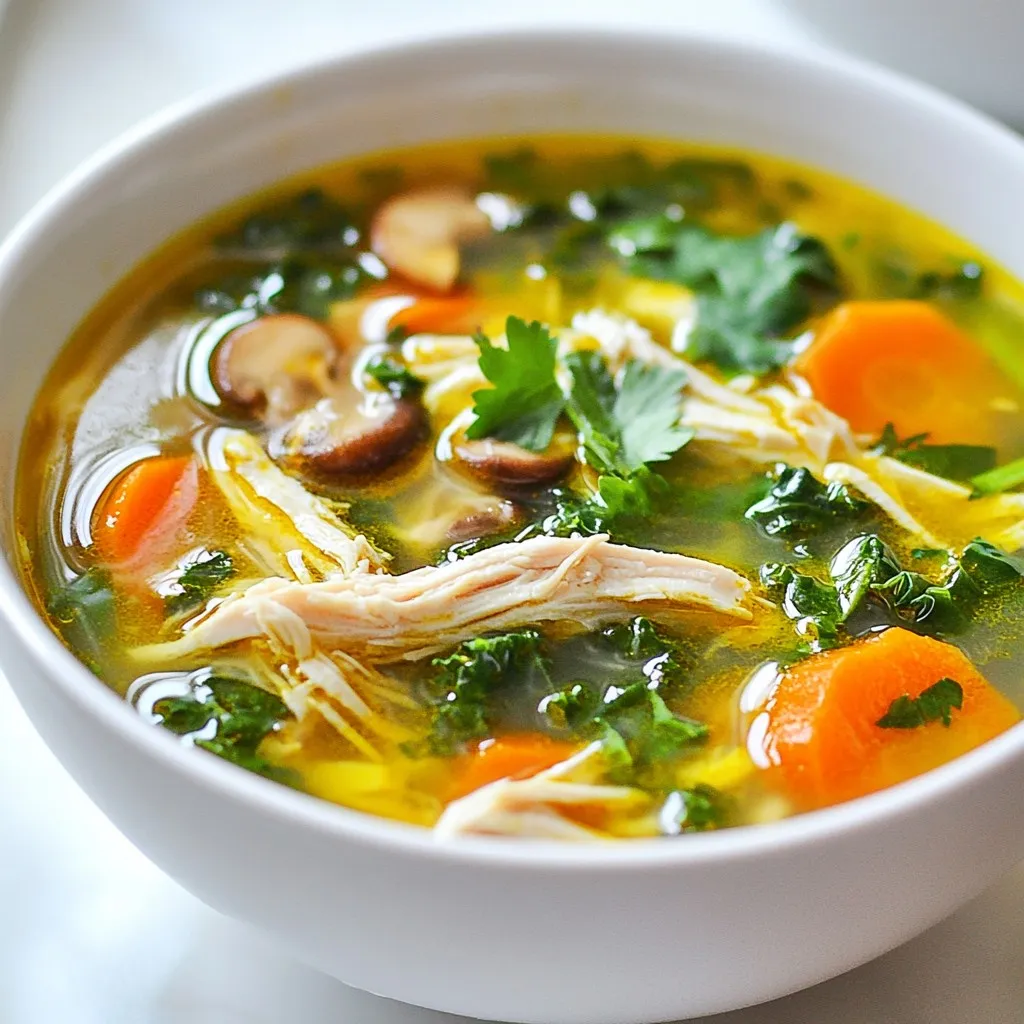
Are you searching for a warm, comforting dish that fights inflammation? Look no further! My Anti-Inflammatory Chicken Soup is not just nourishing, it’s also simple to make. Packed with fresh veggies, lean chicken, and spices like turmeric and ginger, this soup offers both flavor and health benefits. Join me as I guide you through easy steps to create a bowl of goodness that will warm both body and soul. Let’s get cooking!
Why I Love This Recipe
- Health Benefits: This soup is packed with anti-inflammatory ingredients like turmeric and ginger, making it a perfect choice for boosting your wellness.
- Flavorful Comfort: The combination of sautéed vegetables and aromatic spices creates a rich, comforting flavor that warms the soul.
- Easy to Make: With straightforward steps and minimal prep time, this recipe is perfect for busy weeknights or a cozy weekend meal.
- Customizable: Add your favorite veggies or grains to make this soup uniquely yours while keeping it healthy and delicious.
Ingredients
Main Ingredients
– 1 pound boneless, skinless chicken breast
– 6 cups low-sodium chicken broth
– 1 tablespoon extra virgin olive oil
– 1 medium onion, finely diced
– 3 cloves garlic, minced
– 2 medium carrots, thinly sliced
– 2 celery stalks, thinly sliced
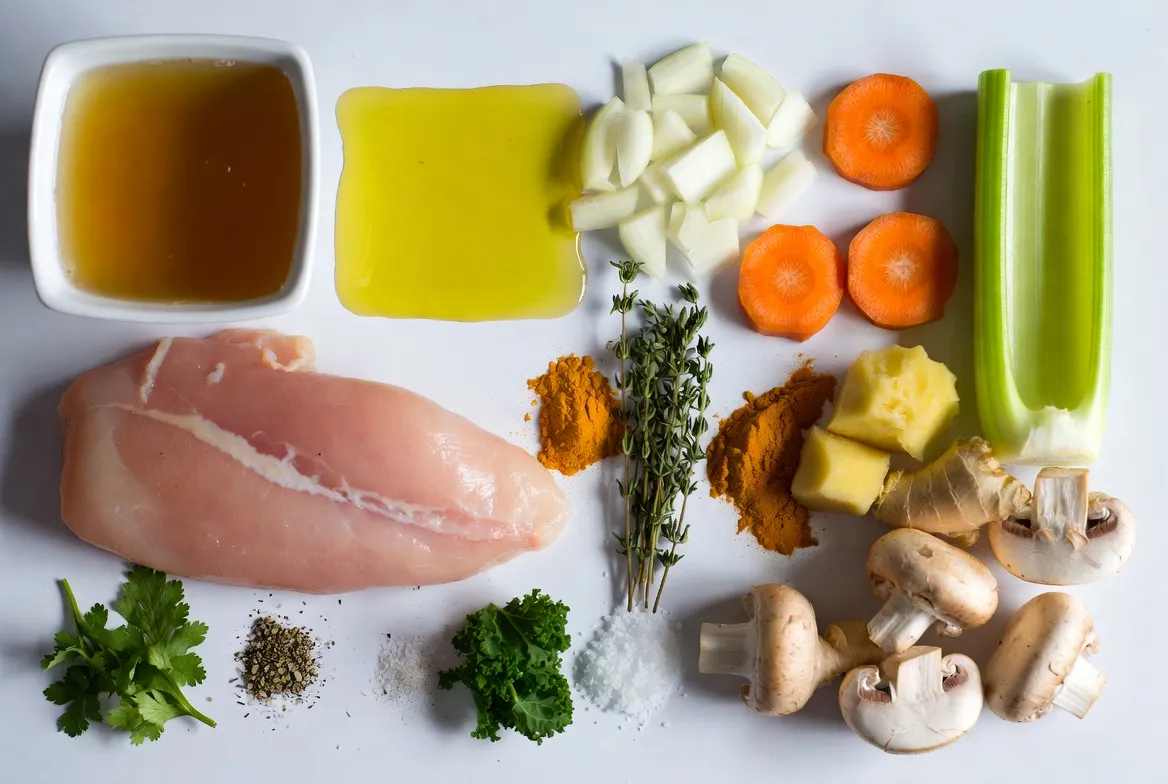
I love these main ingredients. The boneless chicken breast gives the soup a lean protein. The low-sodium broth keeps the flavor rich without too much salt. Extra virgin olive oil adds a nice touch of healthy fat. Fresh veggies like onion, garlic, carrots, and celery provide taste and texture.
Seasonings and Spices
– 1 teaspoon ground turmeric
– 1 teaspoon fresh ginger, finely grated
– 1 teaspoon dried thyme
– Salt and freshly cracked pepper to taste
Seasonings are key to making this soup special. Ground turmeric gives it a bright color and helps fight inflammation. Fresh ginger adds warmth and flavor. Dried thyme gives the soup a subtle earthiness. Don’t forget to taste and adjust the salt and pepper!
Optional Ingredients
– 1 cup kale, chopped (or substitute with spinach)
– 1 cup mushrooms, sliced
– Fresh cilantro or parsley, chopped for garnish
Optional ingredients let you customize your soup. I often add kale or spinach for extra nutrients. Mushrooms bring a savory depth to the dish. Fresh herbs at the end brighten the flavors and make it look pretty.
Step-by-Step Instructions
Preparing the Base
To start, I heat one tablespoon of extra virgin olive oil in a large pot. I set the heat to medium. Once the oil shimmers, I add one medium onion, finely diced. I sauté the onion for about 3-4 minutes until it turns translucent. This step adds great flavor to the soup. Next, I stir in three cloves of minced garlic and one teaspoon of finely grated ginger. I cook them for about one minute. The aroma fills the kitchen and makes my mouth water.
Cooking the Vegetables
Now it’s time to add some color and nutrition. I incorporate two medium carrots, thinly sliced, and two celery stalks, also thinly sliced. I let them cook for an additional 5 minutes. This softens the veggies nicely. Then, I sprinkle in one teaspoon of ground turmeric and one teaspoon of dried thyme. I stir well to coat all the vegetables in the spices.
Simmering the Soup
I pour in six cups of low-sodium chicken broth, bringing the soup to a gentle boil. This is where the magic happens! I carefully add one pound of boneless, skinless chicken breasts. I reduce the heat to low and let it simmer for 20-25 minutes. The chicken will become tender during this time. Once cooked, I remove the chicken and place it on a cutting board. Using two forks, I shred the chicken into bite-sized pieces and return it to the pot.
Final Touches
To finish, I add one cup of sliced mushrooms and one cup of chopped kale. If I’m feeling adventurous, I might use spinach instead. I continue to cook for another 5-7 minutes until the greens wilt and the mushrooms soften. Finally, I taste the soup and adjust the seasoning with salt and freshly cracked pepper. I serve the soup hot, garnished with freshly chopped cilantro or parsley. This adds a lovely burst of color and flavor.
Tips & Tricks
Cooking Recommendations
– Best practices for sautéing vegetables: Start with medium heat. Use extra virgin olive oil for a rich flavor. Add onions first and cook until they turn soft. This takes about 3-4 minutes. Add garlic and ginger next. Stir for just one minute to bring out their scents.
– Ensuring tender chicken: Use boneless, skinless chicken breast for ease. When you add the chicken, keep heat low. Let it simmer for 20-25 minutes. This slow cook makes the chicken tender.
Flavor Enhancements
– Adjusting spice levels: If you like it spicy, add more ginger or turmeric. You can also sprinkle in a pinch of red pepper flakes. Taste as you go to find your perfect mix.
– Recommended sides for serving: Serve this soup with whole-grain bread for dipping. A fresh salad pairs well too. For a fun twist, try it with crusty baguette slices.
Health Benefits
– Anti-inflammatory properties of ingredients: Turmeric is a star in this soup. It has curcumin, known for its anti-inflammatory effects. Ginger also helps reduce inflammation.
– Nutritional advantages of specific vegetables: Carrots and kale are full of vitamins. Carrots have beta-carotene, great for vision. Kale is rich in antioxidants, which help fight disease. Mushrooms add fiber and boost immune health.
Pro Tips
- Use Fresh Ingredients: Fresh vegetables and herbs will enhance the flavor and nutritional value of your soup, making it more vibrant and healthy.
- Chicken Broth Matters: Opt for low-sodium chicken broth to control the salt level in your soup while still achieving a rich flavor.
- Customize Your Greens: Feel free to swap kale with other greens like spinach or Swiss chard, depending on your preference or what you have on hand.
- Let It Rest: Allow the soup to sit for a few minutes after cooking; this lets the flavors meld together, resulting in a more delicious dish.
Variations
Dietary Modifications
To make this soup fit different diets, you can swap the chicken. Tofu or beans work well for a vegetarian option. Both add protein and texture.
For gluten-free adjustments, check your broth. Most low-sodium broth is gluten-free, but confirm it on the label. You can also use rice noodles instead of regular pasta if you like.
Flavor Profiles
You can change the flavor of the soup easily. For an Asian twist, add miso and lemongrass. Miso gives it a rich taste, while lemongrass adds a fresh zing.
If you prefer Mediterranean flavors, try adding oregano and lemon. Oregano gives warmth, and lemon brightens the dish, making it more lively.
Seasonal Ingredients
Using fresh, local produce can make your soup even better. Visit farmers’ markets to find seasonal veggies. They taste great and have more nutrients.
In winter, add root vegetables like parsnips or turnips. In spring, fresh peas or asparagus work well. In summer, try zucchini or bell peppers. In fall, you can add pumpkin for a cozy touch. Each season brings new flavors to explore!
Storage Info
Refrigeration Guidelines
To store leftovers, first let the soup cool. Then, pour it into airtight containers. This keeps the soup fresh and tasty. You can store it in the fridge for up to three days. After this time, the flavor and texture may change.
Freezing Instructions
For freezing, use freezer-safe containers. Leave some space at the top, as soup expands when frozen. It’s best to freeze the soup in individual portions. This way, you can thaw just what you need. To thaw, place the soup in the fridge overnight or use the microwave. When ready to eat, reheat it on the stove over low heat.
Serving Suggestions
To reheat, pour the soup into a pot over medium heat. Stir often to avoid sticking. Heat until it reaches your desired temperature. You can boost the flavor after storage. Add a little fresh garlic or herbs right before serving. This gives your soup a fresh taste that pops. Enjoy your warm, nourishing meal!
FAQs
Common Questions
What makes this chicken soup anti-inflammatory?
This chicken soup is anti-inflammatory due to its key ingredients. Turmeric and ginger are natural anti-inflammatories. They help reduce inflammation in the body. The fresh vegetables provide vitamins and minerals that also fight inflammation. By using low-sodium broth, you lower the risk of water retention. This makes the soup healthier and more balanced.
Can I substitute chicken with another protein?
Yes, you can use other proteins like tofu or beans. Tofu is a great plant-based option. It absorbs flavors well and adds protein. Beans, such as chickpeas or lentils, also work well. They add texture and extra fiber. Choose a protein that suits your diet and taste.
Recipe Adjustments
How to reduce sodium levels in the recipe?
To lower sodium, use homemade broth instead of store-bought. You can also use unsalted broth. When adding salt, start small and taste as you go. Avoid adding extra salt until the end. Fresh herbs can add flavor without high sodium.
Options for spice adjustments for sensitive palates
If you find spices too strong, reduce their amounts. Use half the amount of turmeric and ginger. You can also add more vegetables to fill the soup. This will keep the flavors mild. If you like, add a bit of lemon juice for brightness without heat.
Cooking Times
How long does it take to cook the chicken fully?
Cook the chicken for 20-25 minutes on low heat. Make sure the chicken reaches an internal temperature of 165°F. This ensures the chicken is safe to eat. Use a meat thermometer for accuracy.
What can I do if the soup is too salty?
If the soup tastes too salty, add more water or low-sodium broth. You can also add extra vegetables to balance the salt. Potatoes are a great option; they absorb some salt. Simmer for a few minutes after adding more ingredients. Taste again to check the flavor.
This blog explored a simple chicken soup recipe filled with healthy ingredients. We discussed the main ingredients, steps for cooking, flavor tips, and ways to store it. Remember, you can modify this soup to fit your taste and diet. Whether you’re looking for comfort or nutrition, this recipe has you covered. Enjoy making your own version, and let it warm you from the inside ou